

There it is again: the pen on the trade show stand.
You pick it up, turn it between your fingers and decide within seconds whether it is coming home with you – or staying exactly where it is.
Does it feel pleasantly weighty? Does it write smoothly? Does it look well made? Or is it simply another interchangeable pen with the largest possible logo printed on it?
That is the reality of promotional product classics.
A pen, a tote bag or a reusable bottle is not automatically boring. A product only becomes boring when nobody has given much thought to its selection.
The classic product is not the problem. Generic execution is.
Promotional product classics are not automatically outdated
Many products have been part of the promotional products industry for decades.
Pens. Notebooks. Bags. Keyrings. Sweets. Reusable bottles. Umbrellas.
Some are distributed at trade shows, others are handed out at events or added to an order. They are familiar, easy to understand and often ready to use immediately.
And that can be precisely where their strength lies.
Not every campaign needs a product nobody has ever seen before. Not every occasion calls for a completely new custom-made item. Sometimes a familiar product is exactly right – provided it suits the target group, the brand and the moment.
A classic works when people do not see it as an advertising item they are expected to accept politely, but as a product they can genuinely use.
Why tried-and-tested giveaways can still work
A good promotional product does not have to be complicated.
Its impact often comes from the fact that its purpose is immediately clear. Nobody needs an explanation of how to use a notebook, a bag or a pen.
Established products are also available in different quantities, designs and quality levels. This often makes it easier to adapt them to the occasion, budget and target audience.
Familiarity alone, however, is not enough.
A classic product gains value through the decisions made around it:
- What level of quality do we choose?
- Does the product genuinely fit the target group’s everyday life?
- How should the brand be represented on it?
- When and how will the item be presented?
- Is there a detail that makes it distinctive?
Answering these questions can turn even a familiar product into a strong brand touchpoint.
Five questions to ask before ordering a classic
1. Will the item genuinely be used?
The most important criterion is not how low the price per item is.
What matters is whether the product fulfils a genuine purpose in the recipient’s everyday life.
A pen may be used on a desk every day. A bag can carry shopping, documents or sportswear. A reusable bottle can accompany someone to the office, on the train or to a workout.
But that only works if the product is pleasant and practical to use.
A pen that scratches across the paper quickly disappears into a drawer. An uncomfortable bag stays at home. A bottle with an unreliable lid is unlikely to be taken along a second time.
A product nobody wants to use is not a good investment, even when it carries your logo.
2. Does the quality fit your brand?
Material, weight, workmanship and feel all send a message – even before anyone looks closely at the logo.
A very lightweight pen may be entirely appropriate for a short-term, high-volume campaign. For a premium client gift or a company associated with precision and quality, a different version may feel more credible.
This does not mean automatically choosing the most expensive product for every project.
It means ensuring that the item supports the brand’s quality promise rather than unintentionally communicating the opposite.
3. Would people use the product without a large logo?
The logo should be visible. But visible does not necessarily mean as large as possible.
With bags, textiles, bottles and other everyday products in particular, subtle branding can make the item much more appealing to use.
A small engraving may be enough. Tone-on-tone branding. A pattern in the company colours. A surprising detail on the inside. Or a personal message on the packaging.
The strongest brand presence often emerges when people choose to use the product voluntarily and with pleasure.
4. Does the product fit the occasion?
A product never works independently of the moment in which it is presented.
A pen at a workshop may be useful because it is needed straight away. A tote bag at a trade show helps visitors carry brochures and other items. A reusable bottle at a sporting event fits naturally into the situation.
The same product may feel completely generic in a different setting.
The question should therefore not simply be:
“What can we hand out?”
It should be:
“What would help people at this particular moment?”
5. What turns the classic into your classic?
Individuality does not begin only with a fully custom-made product.
It can be created through a distinctive colour, an unusual material combination, personalisation with a name or thoughtfully designed packaging.
The story behind the product can also make a difference.
Why did you choose this particular item? How does it connect to the campaign, the company or the occasion? Is there a message that explains the choice and gives the product meaning?
A short sentence on a card can suddenly turn a familiar item into something very personal.
Five classics – and how to rethink them
The pen
It is probably one of the best-known promotional products of all. And it can still work.
The writing experience, material, shape and branding are what matter. A high-quality pen with a pleasant weight, a carefully chosen colour and subtle engraving feels completely different from a generic mass-distribution item.
The presentation can add value too: paired with a notebook, included in a workshop set or accompanied by a small card explaining which new ideas will hopefully be written with it.
The tote bag
A bag with a large logo on the front is quick to produce. But that does not automatically mean people will enjoy carrying it.
It becomes more interesting through a distinctive shape, a strong graphic motif, a premium feel or a design that works beyond the company event.
The logo can become part of the overall design instead of simply being placed on top of it.
The notebook
A notebook offers more possibilities than may be apparent at first.
The cover can reflect the brand. Selected pages can contain information, questions or small prompts. Adding a name makes the notebook personal. A message on the first page can explain which thoughts and ideas it is intended for.
This turns a familiar stationery item into a companion with its own story.
The reusable bottle
Reusable bottles are no longer a novelty either. Good models, however, are used regularly and over a long period of time.
Function and quality are particularly important here. Is the bottle comfortable to hold? Is it easy to clean? Does the size suit the target group? Is the lid reliable?
Colour, finish and subtle personalisation can then turn it into a product that connects credibly with the brand.
The edible giveaway
Sweets, snacks and small gourmet products have one clear advantage: they create an immediate moment of enjoyment.
But the idea still matters.
Unusual packaging, an appropriate message or a flavour connected to the campaign can turn a small gesture into a friendly conversation starter.
The product may not be kept for long. The situation and feeling surrounding it can still remain memorable.
When a classic is the wrong choice
There are projects where even a well-designed standard product is not enough.
For example, when:
- an important milestone or anniversary deserves special recognition,
- selected clients are to receive a personal sign of appreciation,
- a new brand or campaign deliberately wants to surprise people,
- the product needs to tell a very specific story,
- or the target group has already received similar giveaways many times.
In these situations, an individual product idea, a special combination or a fully custom-made solution may be the better choice.
Find out more in our article about promotional products with impact.
Fewer products, but the right ones?
A low price per item may look attractive at first.
But the number of products distributed is not the only factor that matters. What matters is how many of them are relevant, used and leave a positive impression.
In some cases, a large quantity of simple giveaways makes sense – for example, during a broad public campaign.
In other situations, it may be more effective to reach fewer people with a more carefully selected, higher-quality product.
There is no universal answer.
The right solution depends on the objective, target group, occasion, quantity, budget and deadline. That is precisely why a successful project begins with a clear brief and honest advice.
A classic can also be chosen responsibly
A classic product is not automatically sustainable or unsustainable.
Relevant factors include the material, origin, workmanship, packaging, transport and how long the item will genuinely be used.
A product that works reliably and is used with pleasure over a long period has very different qualities from a short-lived item with no real purpose.
Those who place particular importance on materials, origin and responsible alternatives can find more information about our sustainable promotional products.
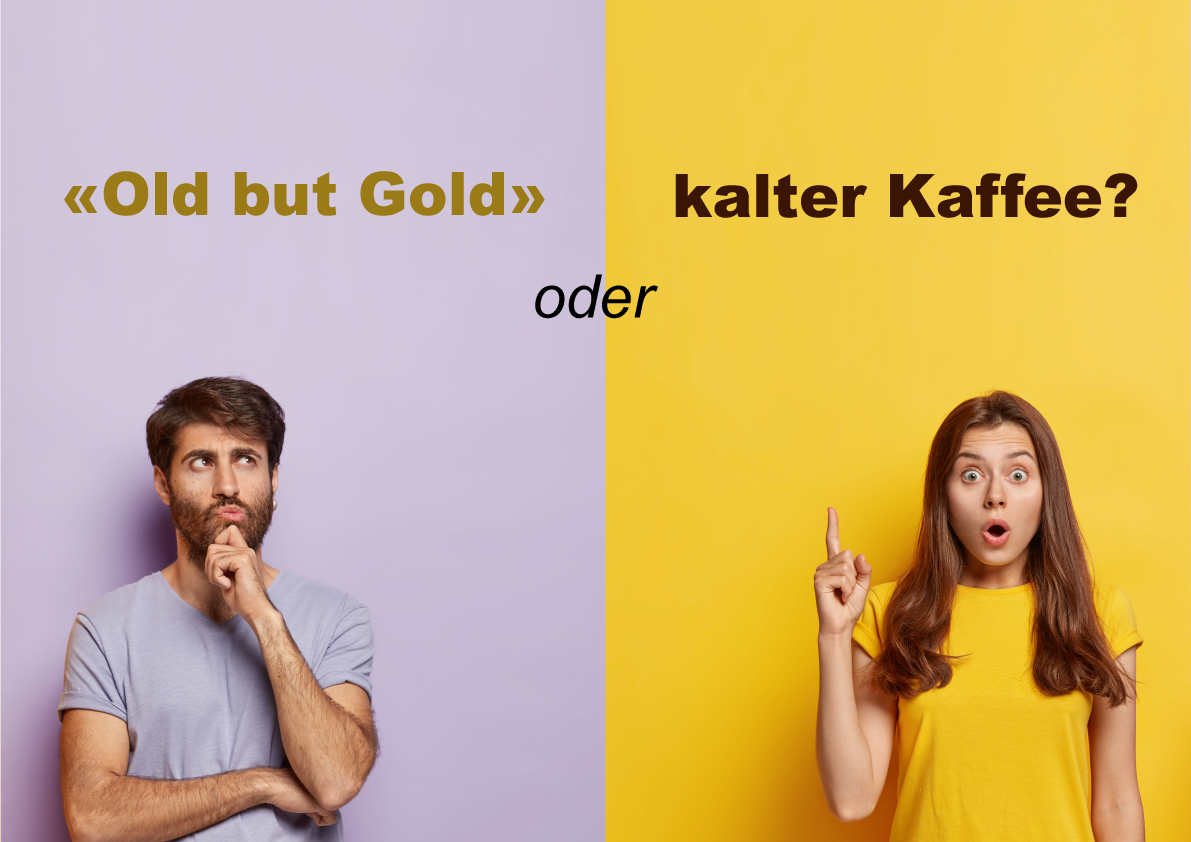
Our answer: Old but Gold – when the idea is right
Promotional product classics still have every right to exist.
They do not become outdated simply because people already know them. They become generic when they are selected without a clear objective, produced as cheaply as possible and covered with an oversized logo.
A good classic, on the other hand:
- fits the target group’s everyday life,
- matches the brand’s quality standards,
- uses attractive and appropriate branding,
- works in the specific moment of presentation,
- and gains its own character through a detail or a story.
So yes, it may absolutely be a pen.
Or a bag. A bottle. A notebook.
As long as it is not simply any pen, bag, bottle or notebook.
Are you planning a trade show, campaign or client activation and unsure whether a classic product or a more individual solution would work better?
Tell us who you want to reach, what the occasion is and what budget is available. Together, we will find an idea that fits your brand and can be delivered reliably.
Talk to us about your next promotional products project.
think. inspire. create. brand it.